
10 Common Financial Audit Preparation Mistakes to Avoid
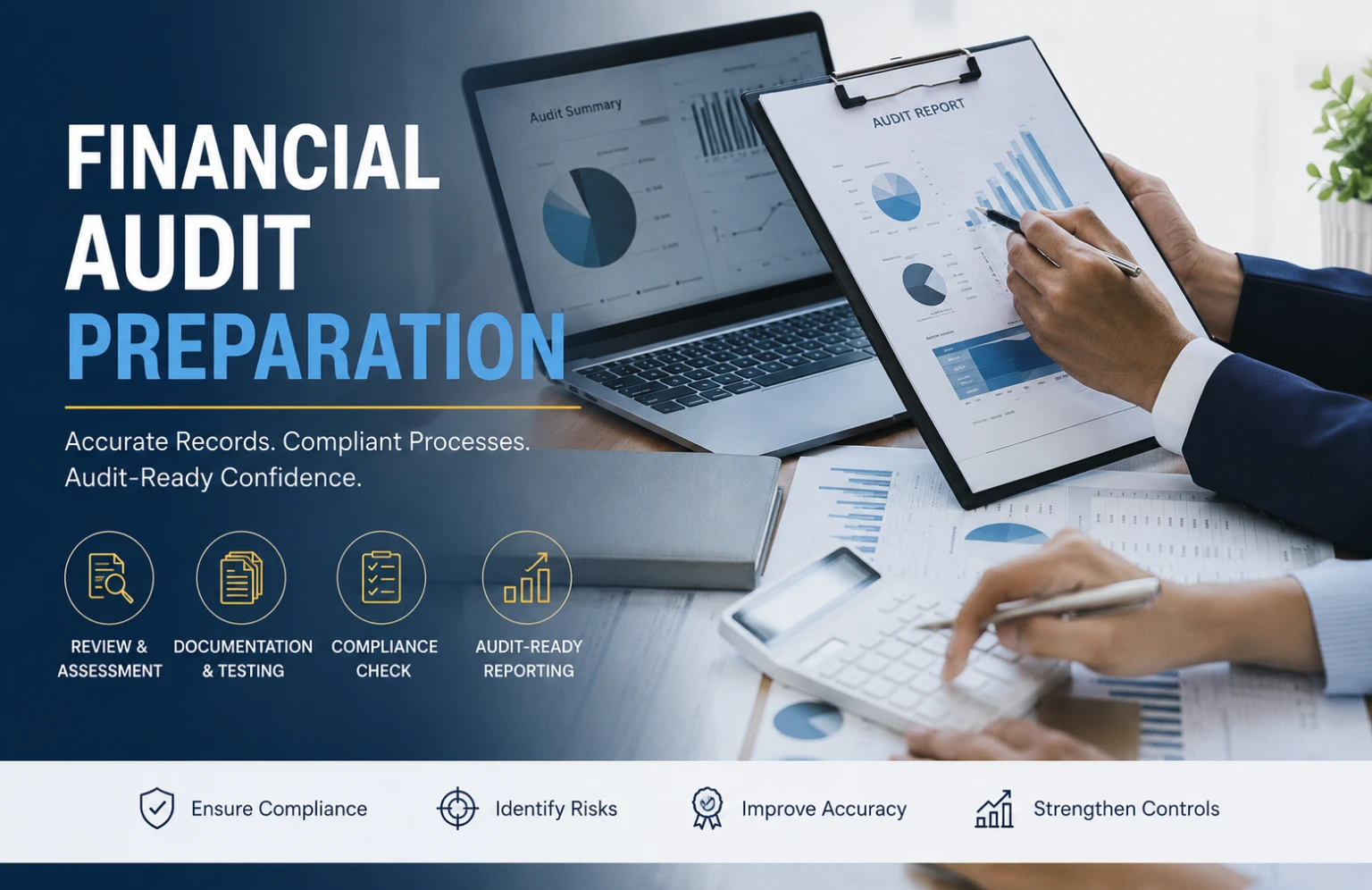
Preparing for a financial audit can be challenging, particularly when accounting records are incomplete, supporting documents are difficult to locate, or the finance team starts preparing too close to the audit date.
A financial audit does not have to become a stressful, last-minute exercise. With organized records, regular reconciliations, and a clear preparation process, businesses can make the audit more efficient and reduce avoidable issues.
In this guide, we'll look at 10 common financial audit preparation mistakes businesses should avoid and what they can do instead.
1. Waiting Until the Last Minute
One of the most common audit preparation mistakes is waiting until the auditor sends a request list before reviewing financial records.
Trying to prepare everything in a few days can overwhelm the accounting team and increase the likelihood of errors.
What to do instead: Start preparing well before the audit. Review major accounts, reconcile balances, organize documentation, and identify potential issues early.
Regular monthly or quarterly preparation can make year-end audit preparation much easier.
2. Failing to Reconcile Accounts
Unreconciled accounts are a major warning sign during an audit.
If the balance in the general ledger doesn't agree with bank statements, subsidiary records, or supporting schedules, auditors may need additional explanations and testing.
Important accounts to reconcile include:
- Cash and bank accounts
- Accounts receivable
- Accounts payable
- Inventory
- Fixed assets
- Payroll liabilities
- Debt
- Accrued expenses
- Prepaid expenses
What to do instead: Complete account reconciliations regularly rather than waiting for the audit.
3. Keeping Poorly Organized Documentation
Auditors need evidence to support financial statement balances and transactions. If documents are scattered across emails, computers, filing cabinets, and different departments, finding information can take unnecessary time.
Common supporting documents include:
- Invoices
- Bank statements
- Contracts
- Loan agreements
- Payroll records
- Tax filings
- Fixed asset schedules
- Lease agreements
- Customer agreements
What to do instead: Create a centralized and secure audit documentation system. Organize files by account, reporting period, or audit request.
4. Ignoring Prior-Year Audit Findings
If the business has been audited before, previous audit findings should not be overlooked.
Auditors may return to issues identified in prior periods to determine whether management has addressed them.
Ignoring previous recommendations can make the same problem appear repeatedly.
What to do instead: Review the prior audit report, management letter, and control recommendations. Create an action plan for unresolved issues and retain evidence showing how corrective actions were implemented.
5. Not Reviewing Significant Account Fluctuations
Large changes in revenue, expenses, assets, liabilities, or other accounts can attract auditor attention.
For example, if a company's revenue increases significantly but its cash flow does not change as expected, auditors may ask management to explain the difference.
Unusual fluctuations aren't necessarily a problem, but management should understand them.
What to do instead: Compare current-period financial statements with prior periods and budgets. Investigate significant changes and prepare explanations with supporting documentation.
6. Overlooking Accounts Receivable and Bad Debts
Accounts receivable deserves careful attention during audit preparation.
Businesses sometimes fail to review old outstanding balances or update their allowance for doubtful accounts.
Auditors may examine whether receivables are collectible and whether the financial statements appropriately reflect credit losses.
What to do instead: Review the AR aging report, investigate overdue balances, document collection efforts, and evaluate whether the allowance or expected credit loss estimate is appropriate under the applicable accounting framework.
7. Missing Unrecorded Liabilities
Businesses can focus heavily on assets while overlooking liabilities that should have been recorded.
For example, expenses incurred before year-end may not have been invoiced or recorded until after the reporting period.
This can result in incomplete liabilities and understated expenses.
What to do instead: Review payments made after year-end, vendor statements, unpaid invoices, purchase records, and other available information for potential unrecorded liabilities.
8. Not Reviewing Internal Controls
Financial audits aren't only about checking numbers. Depending on the engagement, auditors may also consider controls relevant to financial reporting.
Weak controls can increase the risk of errors or unauthorized transactions.
Areas worth reviewing include:
- Cash disbursements
- Revenue processing
- Journal entries
- Vendor approvals
- Payroll
- User access
- Bank reconciliations
- Financial statement reviews
What to do instead: Document key controls, assign clear responsibilities, and retain evidence that important reviews and approvals are actually performed.
9. Providing Incomplete or Inconsistent Information
Another common mistake is giving auditors information that doesn't agree across different reports.
For example, an accounts receivable aging report may show a different balance from the general ledger. Similarly, a fixed asset schedule may not agree with the balance sheet.
These differences can lead to additional questions and investigation.
What to do instead: Before submitting documents, compare supporting schedules with the general ledger and financial statements. Resolve discrepancies before the audit begins.
10. Poor Communication With the Audit Team
Even well-prepared accounting records can become difficult to manage if communication is unclear.
Delays can occur when no one knows who is responsible for a request, when documents are submitted without explanations, or when questions remain unanswered for several days.
What to do instead: Assign an internal audit coordinator or primary contact. Track requests, assign owners, establish deadlines, and communicate promptly when additional time or clarification is needed.
How to Avoid These Audit Preparation Mistakes
The best way to avoid audit problems is to make preparation part of the normal accounting process.
Businesses can create an ongoing audit-readiness routine that includes:
- Monthly account reconciliations
- Quarterly financial statement reviews
- Regular documentation updates
- Annual internal control reviews
- Periodic review of prior audit findings
- Centralized financial records
- Clear responsibility for accounting tasks
This approach reduces the amount of work required immediately before the audit.
Financial Audit Preparation Checklist
Before the auditors begin, review these areas:
- Are all balance sheet accounts reconciled?
- Do supporting schedules agree with the general ledger?
- Are financial statements complete?
- Are AR and AP balances current?
- Have potential unrecorded liabilities been reviewed?
- Are fixed asset records updated?
- Are bank statements and reconciliations available?
- Are contracts and agreements organized?
- Have prior audit findings been addressed?
- Are significant transactions properly documented?
- Are internal controls operating as expected?
- Is someone responsible for managing audit requests?
Final Thoughts
Financial audit preparation becomes much easier when businesses avoid common mistakes and treat audit readiness as an ongoing process.
Waiting until the last minute, failing to reconcile accounts, losing supporting documentation, ignoring prior findings, and communicating poorly can all create unnecessary delays.
Instead, businesses should maintain accurate books throughout the year, review significant accounts regularly, organize documentation, monitor internal controls, and resolve potential issues before auditors arrive.
For companies with complex financial operations, professional accounting support can also help strengthen financial reporting, improve recordkeeping, and prepare the business for a smoother audit process.
The goal of financial audit preparation isn't simply to "get through" the audit. It is to build financial records that are accurate, organized, well-supported, and ready for review at any time.

 English
 Arabic
 French
 Spanish
 Portuguese
 Deutsch
 Turkish
 Dutch
Dutch
 Italiano
 Romaian
 Portuguese (Brazil)
 Greek
Greek